Process Advantage · Method
The Process Advantage Method
A practical way to move your business from firefighting and key-person dependency to stable, scalable workflows that are ready for digitalization.
Designed for SME owners and operations leaders who need real-world improvements – not 200-page process manuals.
Built for SMEs
Use as little or as much of the method as your current situation needs.
Method Overview
A lightweight operating system for improving workflows without a process department.
Why a Method – Not Just Individual Tools
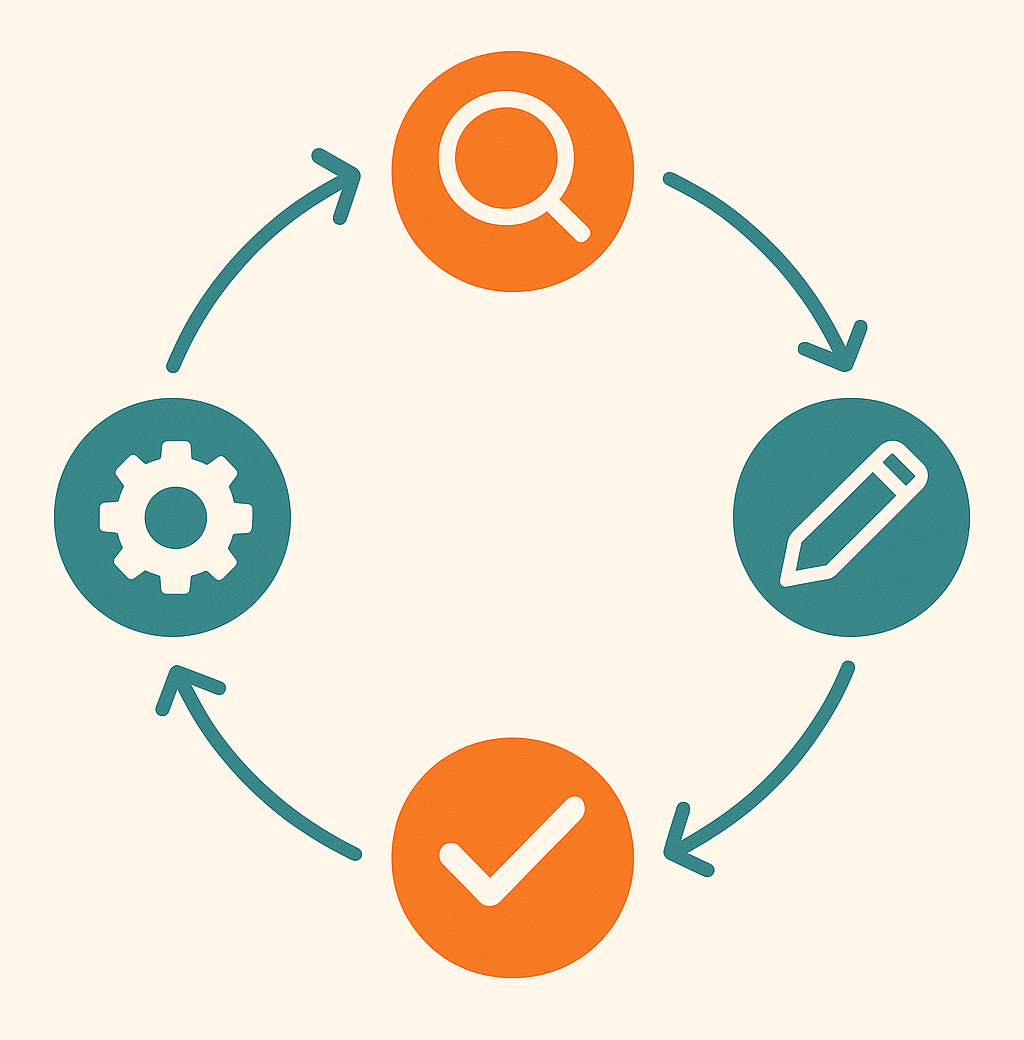
Most SMEs already use dozens of business tools: CRMs, ERPs, ticket systems, spreadsheets, whiteboards. The problem isn’t a lack of tools – it’s a lack of coherent workflows that connect people, tasks and systems.
The Process Advantage Method brings a simple structure to how you think about operations. It helps you:
- See how work really flows across teams – not just how it should work on paper.
- Identify the few constraints that create most of the chaos and delays.
- Redesign workflows without overwhelming your team with bureaucracy.
- Turn improvements into habits, so you don’t slide back into firefighting.
From tools to flow
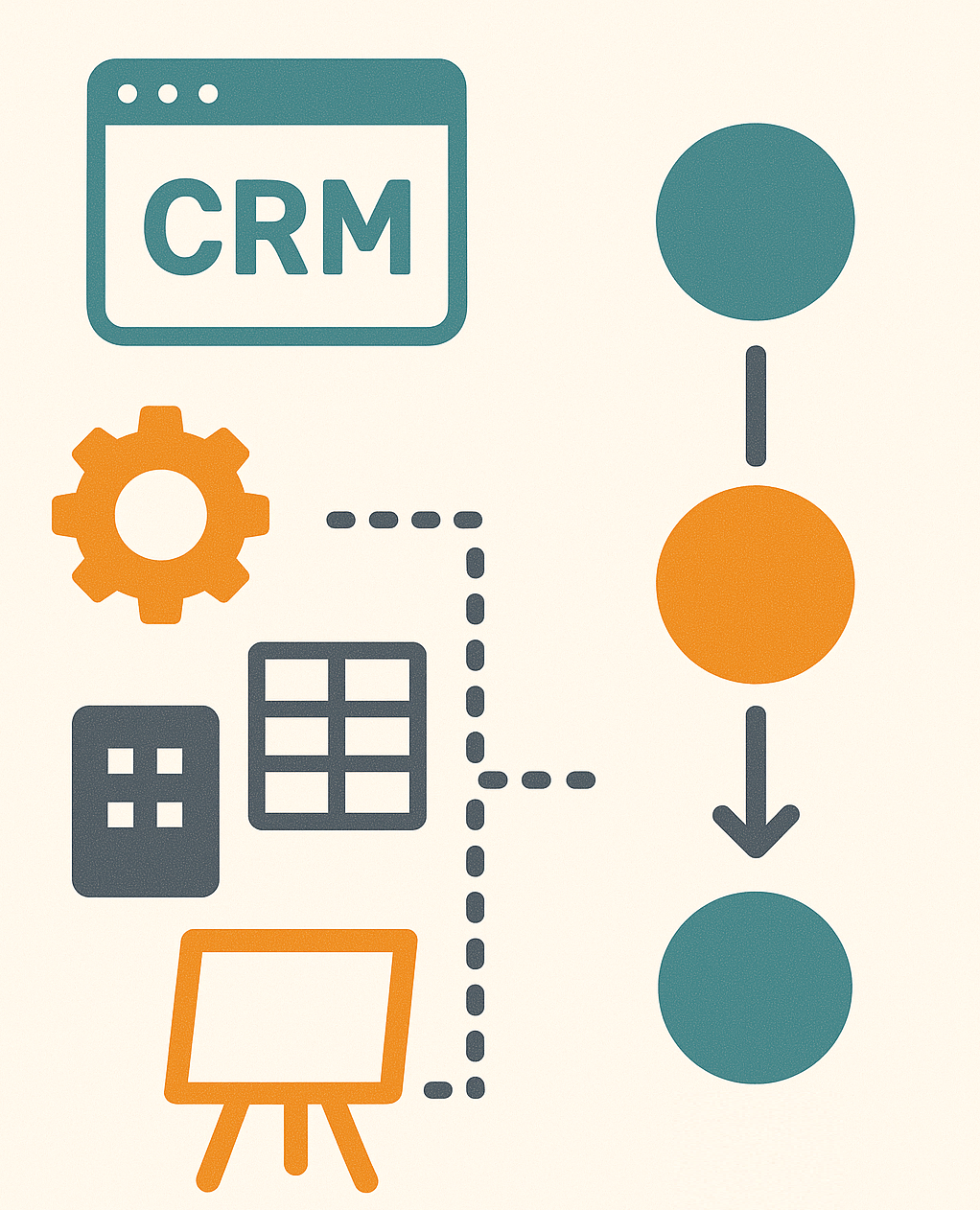
Method structure
The 4 Phases of the Process Advantage Method
The method is organised into four phases. Each phase builds on the previous one and can be applied at the scale that fits your business – from a single workflow to the whole company.
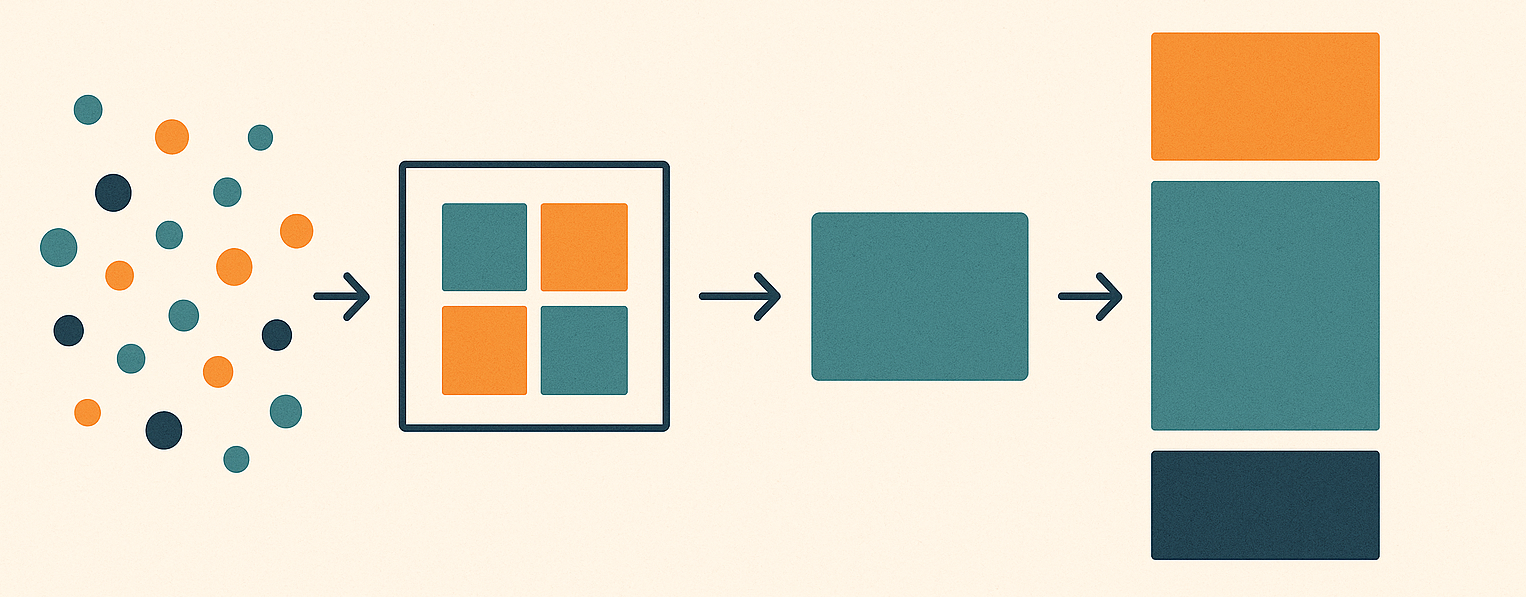
Phase 1
Diagnose Reality
See how work really flows today and where it breaks. No jargon, no huge documentation effort – just a clear picture of reality.
Phase 2
Design Better Flow
Redesign the way work moves across people, teams and tools so it becomes smoother, more predictable and less dependent on heroes.
Phase 3
Deliver & Embed
Turn new designs into real-world practice: implement changes, adjust responsibilities, and create simple routines to keep things on track.
Phase 4
Develop Capability
Build internal skills so your team can keep improving processes, even when you’re not driving every initiative yourself.
12 Building Blocks for Better Operations
Each phase contains three core components. Together, they give you a complete but manageable way to think about improvement.
Phase 1
Diagnose Reality
- 1. Process Clarity
Seeing how work really flows today – across teams, not just within them. - 2. Bottlenecks & Demand
Understanding where work piles up and what drives volume and variability. - 3. Risk & Dependency
Spotting key-person risks and fragile parts of your operation.
Phase 2
Design Better Flow
- 4. Workflow Design
Defining a simpler, clearer way for work to move from request to result. - 5. Handover & Role Clarity
Making sure it’s obvious who does what, when, and with which information. - 6. Systems Alignment
Aligning tools like ERP/CRM around the flow, not the other way around.
Phase 3
Deliver & Embed
- 7. Governance & Ownership
Assigning clear process owners and decision structures. - 8. Improvement Sprints
Running focused change cycles with measurable outcomes. - 9. Measurement & Feedback
Using a small set of meaningful KPIs and feedback loops.
Phase 4
Develop Capability
- 10. Knowledge & Training
Making know-how visible, shareable and easy to update. - 11. Change Story & Communication
Helping people understand why the changes matter. - 12. Roadmap & Portfolio
Prioritising where to improve next – without overwhelming the business.
From scan to action
How the Method Connects the Scan and the Programs
You don’t have to apply all 12 building blocks at once. We use your starting point to choose the right focus.
Step 1
Process Health Scan
The scan gives you a first picture of where you are today across the four phases – and which theme is dominant: chaos, dependency, or tool misfit.
Step 2
Focused Micro-Programs
Short, 4–5 week programs like A1 – Firefighting to Flow or A2 – Capacity Sprint apply selected building blocks to one real workflow in your business.
Step 3
Longer Transformations
For businesses that want a deeper transformation, the same method scales to multi-month programs and larger improvement portfolios.
Who the Process Advantage Method Is For
The method is tailored for organisations that:
- Have between roughly 50 and 200 employees.
- Are growing – or want to grow – but feel operations are “barely holding together”.
- Depend heavily on a few key people who know how to “make it work”.
- Are investing in tools (ERP, CRM, ticketing, etc.) but don’t see the promised gains.
If your company is successful on the outside but messy on the inside, this method is built for you.
Frequently Asked Questions
Is this only for large companies with a process department?
No. The Process Advantage Method is designed specifically for SMEs that don’t have process analysts or a dedicated BPM team. It uses plain language and practical tools that managers can apply.
Does this mean lots of documentation?
No. We prioritise clarity and action over heavy documentation. You will document what is necessary to make work easier and safer, not to tick boxes.
Do we need to change all processes at once?
Absolutely not. In fact, we do the opposite: we focus on one or a few critical workflows, prove value there, and then expand step by step.
Ready to See Where You Are in the Method?
Start with the free Process Health Scan and see how your current situation maps to the four phases.